Calories in Indian breakfast: poha, upma, idli and more
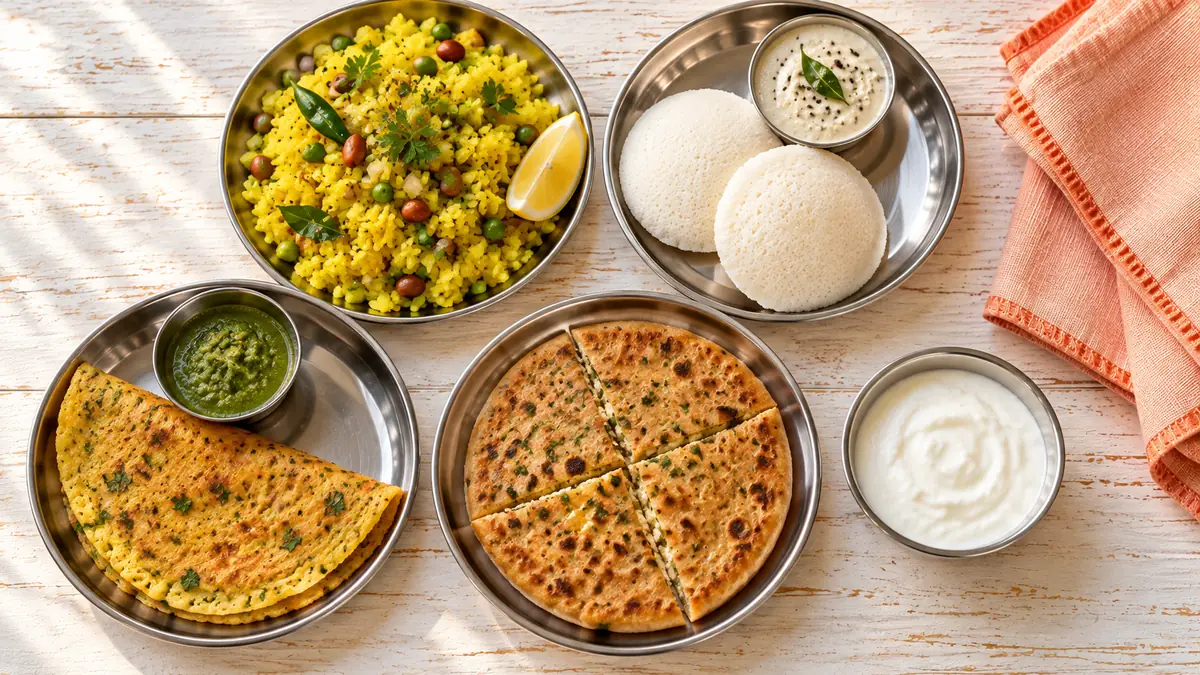
A plate of poha made with one teaspoon of oil has about 185 kcal. Upma is about the same, two idlis are about 115 and a paneer paratha about 260. The calories are close; the protein is not. A besan or moong dal chilla gives three to four times the protein of poha, which is why it keeps you full until lunch.
How many calories are in poha, upma, idli and paratha?
For the portion most women eat at home, cooked with one measured teaspoon of oil:
| Breakfast and portion | Calories | Protein |
|---|---|---|
| Poha, 1 plate (40 g dry) | 185 kcal | 2.8 g |
| Poha with peanuts (10 g) | 240 kcal | 5.4 g |
| Upma, 1 plate (40 g rava) | 185 kcal | 4.4 g |
| Vegetable upma (with 50 g vegetables) | 200 kcal | 5.2 g |
| 2 idlis | 115 kcal | 4 g |
| 3 idlis | 175 kcal | 6 g |
| 2 idlis with 2 tbsp coconut chutney | 175 kcal | 4.9 g |
| Plain paratha (40 g atta) | 180 kcal | 5.3 g |
| Gobi paratha | 195 kcal | 6.2 g |
| Paneer paratha (30 g paneer) | 260 kcal | 10.7 g |
| Methi thepla | 170 kcal | 5.3 g |
| Besan chilla (55 g besan) | 255 kcal | 12.3 g |
| Moong dal chilla (50 g dal) | 220 kcal | 12 g |
| Oats (30 g) in water | 115 kcal | 5.1 g |
| Oats (30 g) in 150 ml milk | 205 kcal | 9.9 g |
| Daliya (30 g) in 150 ml milk | 190 kcal | 8.4 g |
| 2-egg masala omelette | 210 kcal | 13 g |
| 2 boiled eggs | 155 kcal | 12.6 g |
Notice how poha, upma and a plain paratha all sit around 180 to 185 kcal. The oil matters as much as the dish: every extra teaspoon of oil or ghee adds about 45 kcal to any of them.
Which Indian breakfast is best for weight loss?
Look at protein, not only calories. Protein keeps you full for longer, and studies of weight-loss diets find that higher protein helps people eat less without feeling deprived. For about the same calories:
- Besan chilla gives 12 g of protein, compared with under 3 g in a plate of poha.
- Moong dal chilla gives 12 g for 220 kcal.
- Eggs give about 6 g each for 80 kcal.
You do not have to give up poha or idli. Add a katori of curd, a handful of sprouts or a boiled egg and they become a filling breakfast too.
What does a weight-loss Indian breakfast look like?
Nine breakfasts of 220 to 320 kcal, every ingredient weighed and worked out with the same food data the BodyQuest app uses:
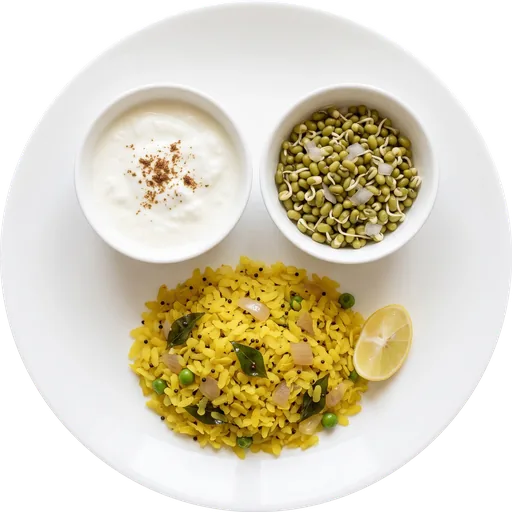
Vegetable poha with curd and sprouts
Poha 40 g; Chopped vegetables 50 g; Oil 1 tsp; Curd 100 g; Moong sprouts 50 g
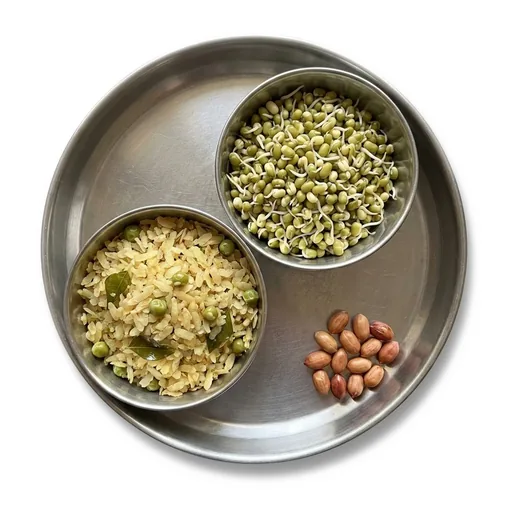
Sprouts poha with peanuts
Poha 40 g; Moong sprouts 50 g; Peanuts 10 g; Oil 1 tsp
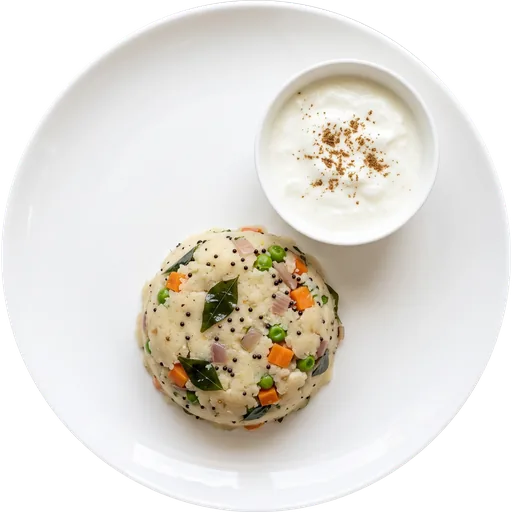
Vegetable upma with curd
Rava (suji) 40 g; Chopped vegetables 50 g; Oil 1 tsp; Curd 150 g

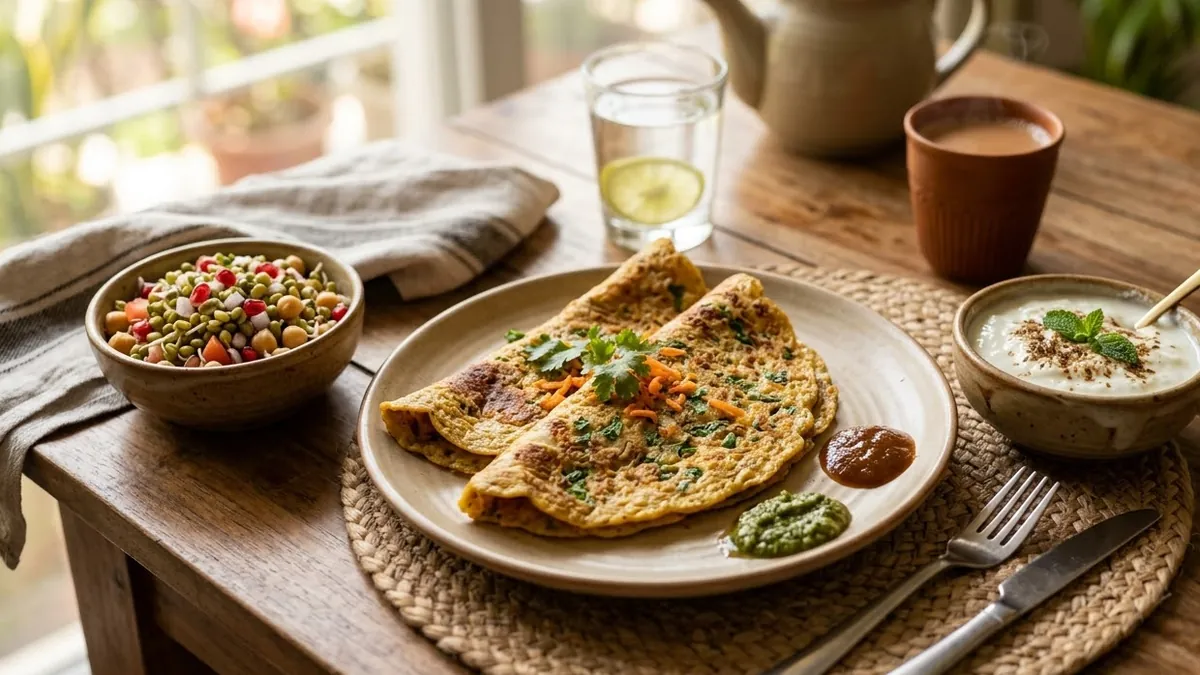
Moong dal chilla with curd and green chutney
Moong dal (dry) 40 g; Oil 1 tsp; Curd 100 g; Green chutney 20 g
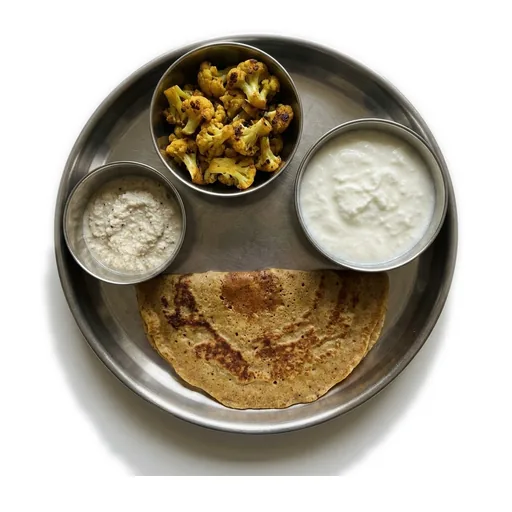
Besan chilla with Greek yogurt
Besan 45 g; Oil 1 tsp; Greek yogurt 100 g
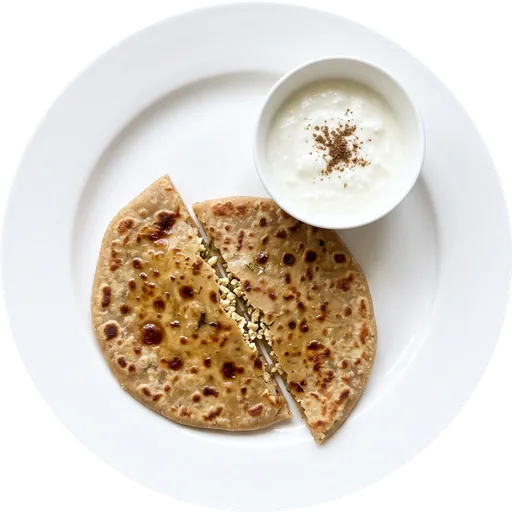
Paneer paratha with curd
Roti 40 g atta; Paneer 30 g; Oil 1 tsp; Curd 100 g
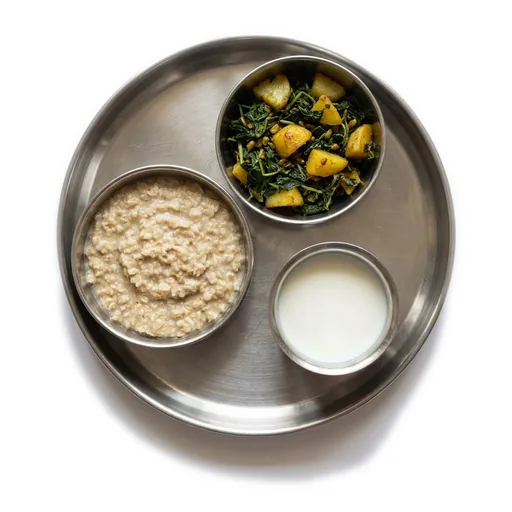
Masala oats with a glass of milk
Oats 30 g; Chopped vegetables 50 g; Oil 0.6 tsp; Toned milk 200 ml
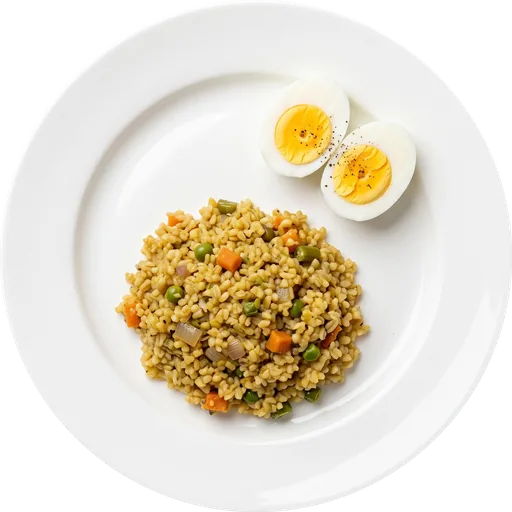
Vegetable daliya with a boiled egg
Daliya 30 g; Chopped vegetables 50 g; Oil 0.6 tsp; Eggs 1

Masala omelette with roti
Eggs 2; Chopped vegetables 30 g; Oil 1 tsp; Roti 1 (30 g atta)
How many calories should your breakfast be?
On a weight-loss day of about 1,300 to 1,600 kcal, a breakfast of 250 to 350 kcal with at least 10 to 15 g of protein leaves room for a proper lunch, a snack and dinner. Your own daily number depends on your height, weight and activity; the BMI and calorie calculator works it out in a few seconds. For more protein-rich ideas, see our high-protein Indian breakfasts.
Is poha or upma better for weight loss?
They are nearly the same: about 185 kcal a plate. Upma has a little more protein (4.4 g against 2.8 g). Either one is better with vegetables mixed in and a protein on the side, such as curd or sprouts. Peanuts in poha add protein but also calories: 10 g of peanuts adds about 55 kcal.
How are these calories worked out?
From the Indian Food Composition Tables per 100 g. Poha, rava, oats, daliya, besan and dal are weighed dry, before cooking, so the number does not change with how much water you add. Every dish counts one teaspoon of oil (about 45 kcal) unless it says otherwise.
Questions people ask
How many calories are in 1 plate of poha?
About 185 kcal and 3 g of protein for a plate made from 40 g of dry poha and one teaspoon of oil. With 10 g of peanuts it is about 240 kcal.
How many calories are in 2 idli?
About 115 kcal and 4 g of protein for two medium idlis. With two tablespoons of coconut chutney it is about 175 kcal.
How many calories are in a paratha?
A plain paratha from 40 g of atta with one teaspoon of oil is about 180 kcal. A paneer paratha with 30 g of paneer is about 260 kcal, and a gobi paratha about 195 kcal.
Which Indian breakfast is best for weight loss?
The ones with the most protein for their calories: besan or moong dal chilla, eggs, and anything with curd, Greek yogurt or paneer. Poha, upma and idli are fine too, with curd, sprouts or an egg added for protein.
How many calories should breakfast be for weight loss?
For most women on a weight-loss day of about 1,300 to 1,600 kcal, a breakfast of 250 to 350 kcal with at least 10 to 15 g of protein works well.
Sources
- ICMR-NIN: Indian Food Composition Tables (2017)
- ICMR-NIN: Dietary Guidelines for Indians (2024)
- Leidy HJ et al. The role of protein in weight loss and maintenance, Am J Clin Nutr (2015)

BodyQuest is a home weight-loss programme for Indian women, made by ASANAR STUDIOS in Mohali, Punjab. The calories, protein and portions in our articles come from the same food data and method the BodyQuest app uses to build each member's daily plan, and our advice follows the public guidance listed under Sources. We are not doctors: for a health condition, check with yours.
BodyQuest gives general fitness and food guidance for healthy adults. It does not diagnose or treat any condition. If you are pregnant, breastfeeding, or managing a health condition such as diabetes, thyroid or PCOS, check with your doctor before changing your diet or exercise.