Calories in Indian food: roti, rice, dal and sabzi chart
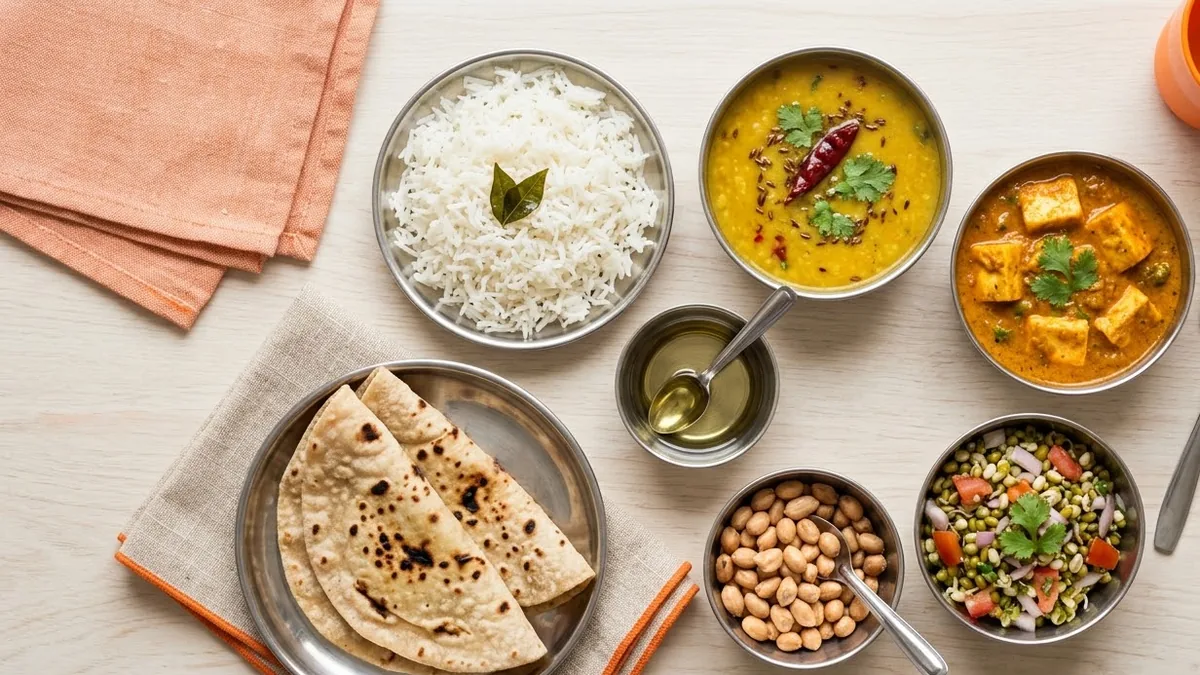
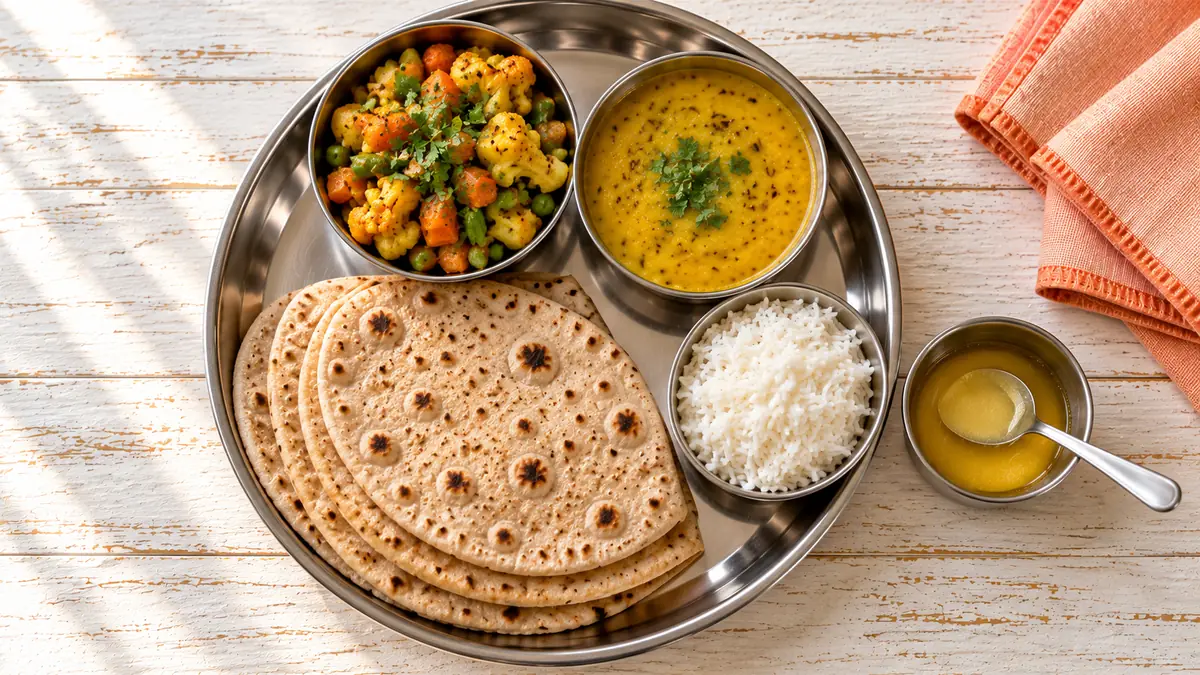
One roti has about 100 calories. A katori of cooked rice has about 185. A teaspoon of oil adds 45 to whatever you cook, so two rotis with a katori of sabzi come to about 280. Here are 40 everyday Indian foods with their calories and protein for the portions you actually eat, so you can see where your day's calories really come from.
How many calories are in roti and sabzi?
With a katori of mixed sabzi cooked in one teaspoon of oil, and no ghee on the rotis:
| Plate | Calories | Protein |
|---|---|---|
| 1 roti + 1 katori sabzi | 180 kcal | 6 g |
| 2 roti + 1 katori sabzi | 280 kcal | 10 g |
| 3 roti + 1 katori sabzi | 385 kcal | 14 g |
| 4 roti + 1 katori sabzi | 485 kcal | 18 g |
| 4 roti + 1 katori dal | 555 kcal | 22 g |
| 2 roti + dal + sabzi + 1 katori rice | 610 kcal | 20 g |
A teaspoon of ghee on each roti adds about 45 kcal per roti. Add up your own plate, with ghee, rice and curd, in the roti sabzi calorie calculator.
How to read this chart
Every number below is for the portion written next to it, and is worked out from the Indian Food Composition Tables. Two rules make the chart accurate in your kitchen:
- Grains and dals are weighed dry. 50 g of dry rice becomes about 150 g once cooked, but the calories stay the same, so the dry weight is the reliable number.
- Oil is counted separately. A sabzi is mostly vegetables and very low in calories; the oil it is cooked in is what adds up. Add about 45 kcal for every teaspoon.
How many calories are in roti, rice and breakfast staples?
| Food and portion | Calories | Protein |
|---|---|---|
| 1 roti (30 g atta, no ghee) | 100 kcal | 4 g |
| 1 jowar roti (30 g flour) | 105 kcal | 3 g |
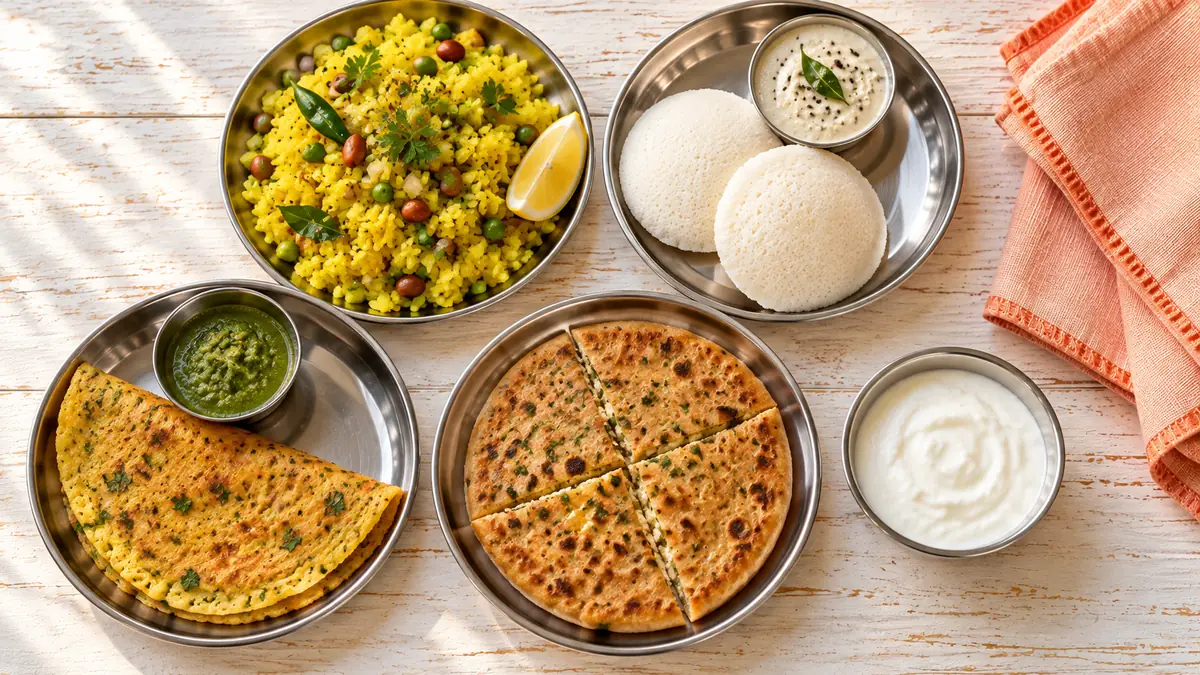
| 1 plain paratha (40 g atta + 1 tsp oil) | 180 kcal | 5.3 g |
| 1 katori cooked rice (50 g dry) | 185 kcal | 3.6 g |
| 1 plate poha (40 g dry, 1 tsp oil) | 185 kcal | 2.8 g |
| 2 idlis | 115 kcal | 4 g |
| Oats (30 g dry) | 115 kcal | 5.1 g |
| Daliya (30 g dry) | 105 kcal | 3.6 g |
| Upma (40 g rava, 1 tsp oil) | 185 kcal | 4.4 g |
A plain roti and a katori of rice are both reasonable in a weight-loss diet. What changes the number is what goes on top: ghee on the roti, or a second helping of rice.
How many calories are in dal, chana and rajma?
| Food and portion | Calories | Protein |
|---|---|---|
| 1 katori toor dal (30 g dry) | 100 kcal | 6.6 g |
| 1 katori moong dal (30 g dry) | 105 kcal | 7.2 g |
| 1 katori masoor dal (30 g dry) | 105 kcal | 7.4 g |
| 1 katori rajma (40 g dry) | 135 kcal | 9.2 g |
| 1 katori chole (40 g dry) | 145 kcal | 7.6 g |
| Roasted chana (30 g) | 110 kcal | 5.7 g |
| 1 katori moong sprouts (100 g) | 30 kcal | 3 g |
| 1 besan chilla (55 g besan, 1 tsp oil) | 255 kcal | 12.3 g |
| Soya chunks (30 g dry) | 105 kcal | 15.6 g |
Dals and pulses give protein and fibre together, which is why a katori of dal keeps you full far longer than the same calories of rice alone.
How much protein is in paneer, tofu, curd and milk?
| Food and portion | Calories | Protein |
|---|---|---|
| Paneer (100 g) | 265 kcal | 18 g |
| Low-fat paneer (100 g) | 205 kcal | 22 g |
| Tofu (100 g) | 75 kcal | 8 g |
| 1 katori curd (150 g) | 90 kcal | 5.2 g |
| 1 katori Greek yogurt (150 g) | 90 kcal | 15 g |
| 1 glass toned milk (200 ml) | 115 kcal | 6.4 g |
| 1 glass chaas (250 ml) | 50 kcal | 3.8 g |
For the most protein per calorie, Greek yogurt or hung curd, low-fat paneer and tofu are the best vegetarian choices. Full-fat paneer is fine in smaller pieces.
How many calories are in eggs, chicken and fish?
| Food and portion | Calories | Protein |
|---|---|---|
| 1 boiled egg | 80 kcal | 6.3 g |
| 1 egg white | 15 kcal | 3.6 g |
| Chicken, cooked (100 g) | 165 kcal | 31 g |
| Fish, cooked (100 g) | 95 kcal | 17 g |
Sabzi and salad
| Food and portion | Calories | Protein |
|---|---|---|
| 1 katori bhindi sabzi (120 g raw), no oil | 40 kcal | 2.3 g |
| 1 katori gobi sabzi (120 g raw), no oil | 30 kcal | 2.3 g |
| 1 katori lauki sabzi (120 g raw), no oil | 15 kcal | 0.7 g |
| 1 katori palak (120 g raw), no oil | 30 kcal | 3.4 g |
| 1 plate salad (100 g) | 15 kcal | 0.8 g |
Vegetables are the cheapest way to fill your plate. Weigh them raw: 120 g raw cooks down to about one katori.
How many calories do oil and ghee add?
| Food and portion | Calories | Protein |
|---|---|---|
| 1 teaspoon oil (5 g) | 45 kcal | 0 g |
| 1 tablespoon oil (13 g) | 115 kcal | 0 g |
This is the line most diets miss. Three tablespoons of oil across a day's cooking is about 345 kcal, as much as three rotis and a katori of dal. Cooking each meal with one measured teaspoon is the single easiest change in an Indian kitchen.
Snacks, nuts and fruit
| Food and portion | Calories | Protein |
|---|---|---|
| Peanuts (30 g, a small handful) | 170 kcal | 7.7 g |
| 10 almonds | 70 kcal | 2.5 g |
| Roasted makhana (1 katori, 15 g) | 50 kcal | 1.5 g |
| 1 medium guava (100 g) | 70 kcal | 2.6 g |
| 2 tablespoons coconut chutney (30 g) | 60 kcal | 0.9 g |
What does a 500-calorie Indian plate look like?
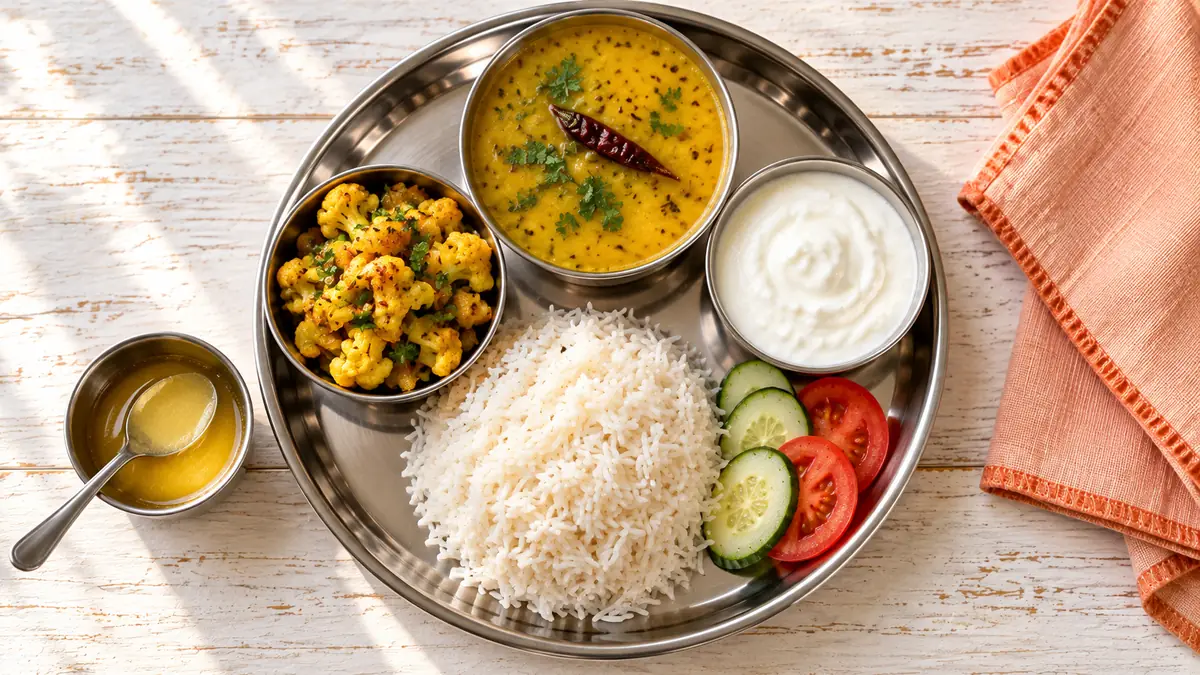
A lunch of two rotis, a katori of dal, a katori of bhindi sabzi made with one teaspoon of oil, and a plate of salad comes to about 100 + 100 + 100 + 40 + 45 + 15 = 400 kcal, with around 17 g of protein. Add a katori of curd and it is about 490 kcal with 22 g of protein: a filling lunch inside a weight-loss day.
Questions people ask
How many calories are in one roti?
A roti made from 30 g of whole wheat atta, without ghee, has about 100 kcal and 4 g of protein. A teaspoon of ghee on top adds about 45 kcal.
Which has fewer calories, roti or rice?
Portion for portion they are close: one roti (30 g atta) is about 100 kcal and a katori of cooked rice (50 g dry) is about 185, roughly two rotis. Roti has a little more protein and fibre. Either fits a weight-loss diet when the amount is measured.
How many calories in a katori of dal?
A katori of cooked toor or moong dal made from 30 g of dry dal has about 100 to 105 kcal and around 7 g of protein, before the tadka. A teaspoon of oil or ghee in the tadka adds about 45.
Is paneer good for weight loss?
Paneer is rich in protein, but full-fat paneer is also high in fat: 100 g has about 265 kcal. Low-fat paneer has about 205 kcal and more protein. Tofu has only about 75 kcal per 100 g.
How are these calories worked out?
From the Indian Food Composition Tables, per 100 g, scaled to the portion. Grains and dals are weighed dry, before cooking, because that is the number that stays the same however much water you use.
Sources
- ICMR-NIN: Indian Food Composition Tables (2017)
- ICMR-NIN: Dietary Guidelines for Indians (2024)
- NHS: Understanding calories

BodyQuest is a home weight-loss programme for Indian women, made by ASANAR STUDIOS in Mohali, Punjab. The calories, protein and portions in our articles come from the same food data and method the BodyQuest app uses to build each member's daily plan, and our advice follows the public guidance listed under Sources. We are not doctors: for a health condition, check with yours.
BodyQuest gives general fitness and food guidance for healthy adults. It does not diagnose or treat any condition. If you are pregnant, breastfeeding, or managing a health condition such as diabetes, thyroid or PCOS, check with your doctor before changing your diet or exercise.