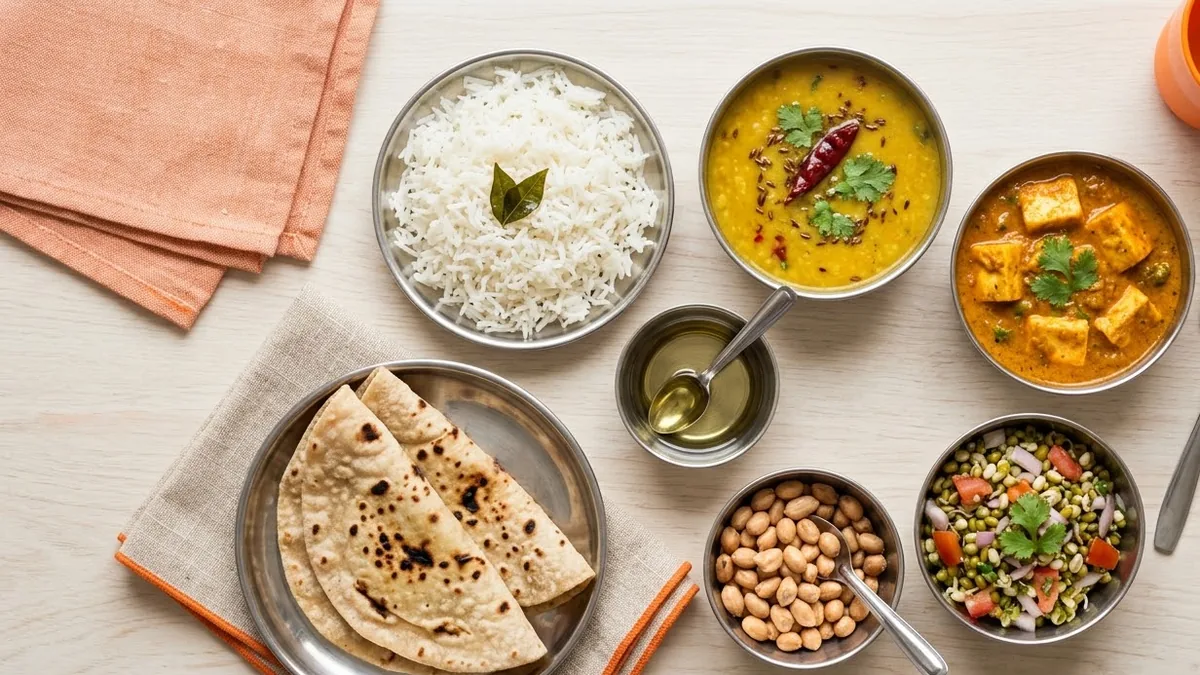
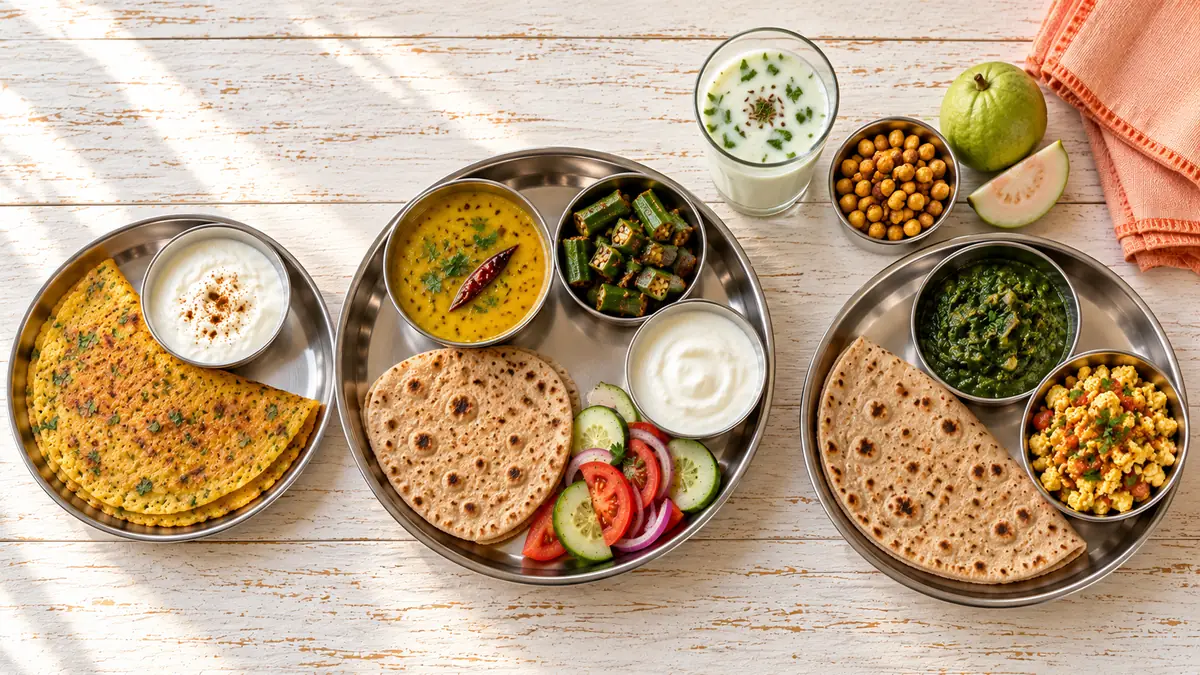
Indian diet plan for weight loss for women: a 7-day vegetarian plan
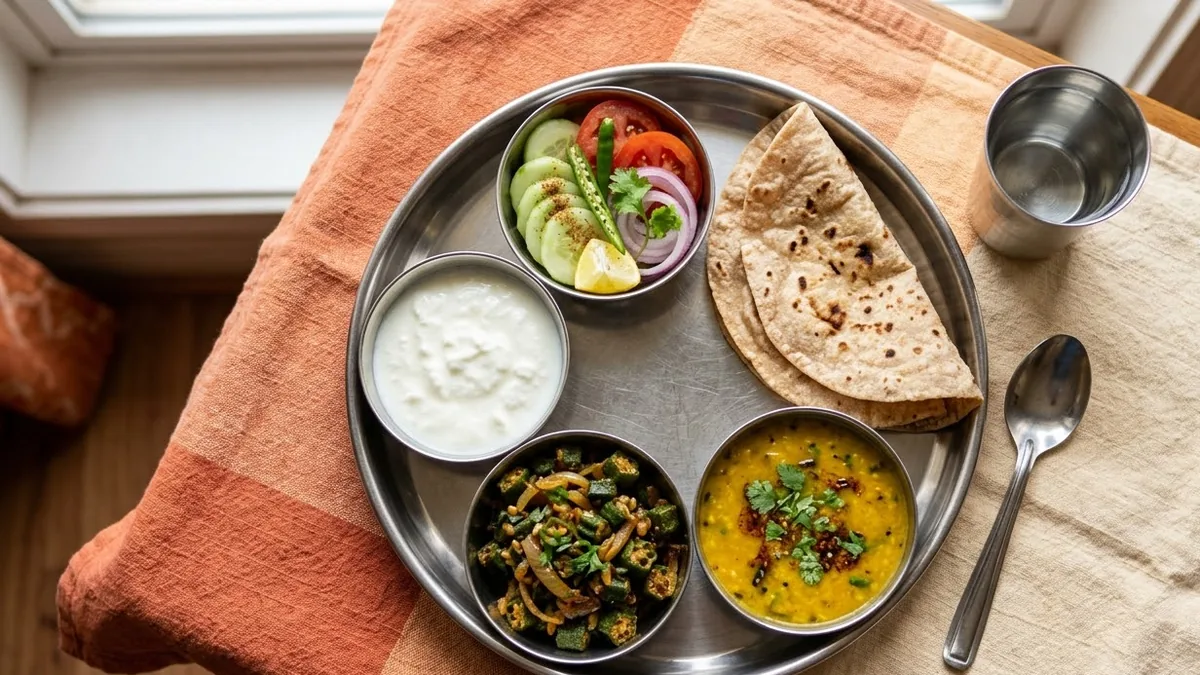
You do not need oats bowls, quinoa or a separate pot for yourself. Dal, roti, rice, sabzi, paneer and curd can take you to a healthy weight if the portions are right. Below is a full week of vegetarian Indian meals with the exact amounts, about 1,400 calories a day, the same plan the BodyQuest app gives women around 70 kg.
How does this Indian diet plan work?
Weight comes off when you eat a little less energy than your body uses, day after day. The aim is not to starve. It is to eat the same Indian food in the right amounts, with enough protein to keep you full and protect your muscle.
Every day in this plan follows the same simple shape:
- Four meals: breakfast, lunch, an evening snack and dinner. Lunch is the biggest meal.
- Protein at every meal: dal, paneer, curd, sprouts, chana or soya. The week averages 80 to 95 g of protein a day.
- Measured oil: about 4 to 5 g (one teaspoon) per meal. Oil is where most hidden calories in Indian cooking come from.
- A plate of sabzi or salad with lunch and dinner, so the plate looks full.
- A 10 to 15 minute walk after meals, and 8 to 10 glasses of water through the day.
The 7-day vegetarian diet plan
Each day comes to about 1,340 to 1,415 kcal. Calories and protein are worked out from the Indian Food Composition Tables, the same way the BodyQuest app does it.
Day 1 (Monday): about 1,370 kcal, 88 g protein
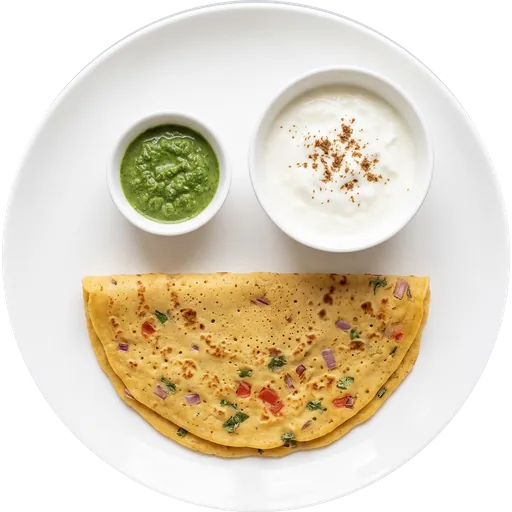
Besan chilla with curd and green chutney
Besan 1 chilla; Chopped vegetables 60 g before cooking; Hung curd (thick curd) 75 g; Green chutney 15 g; Cooking oil 4 g
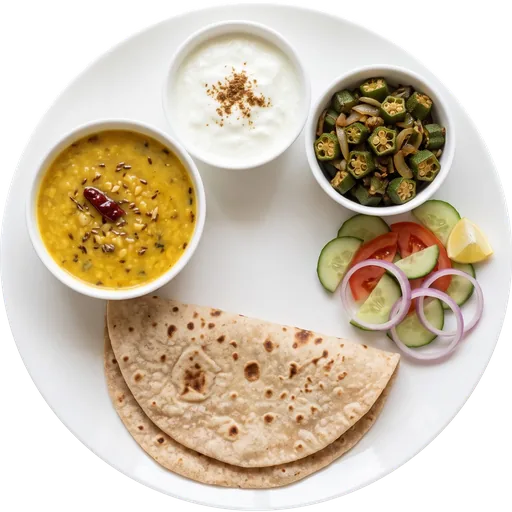
Roti, dal, bhindi sabzi, curd and salad
Whole wheat atta 2 rotis; Toor dal 30 g dry; Hung curd (thick curd) 125 g; Bhindi sabzi 115 g before cooking; Salad 100 g; Cooking oil 4 g
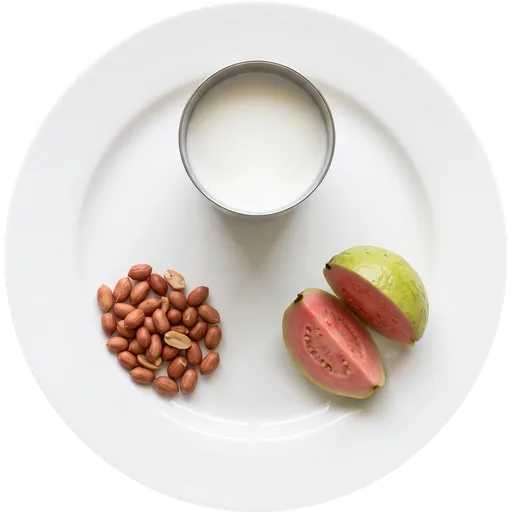
Milk, a fruit and roasted peanuts
Toned milk 150 g; Seasonal fruit 55 g; Peanuts 9 g
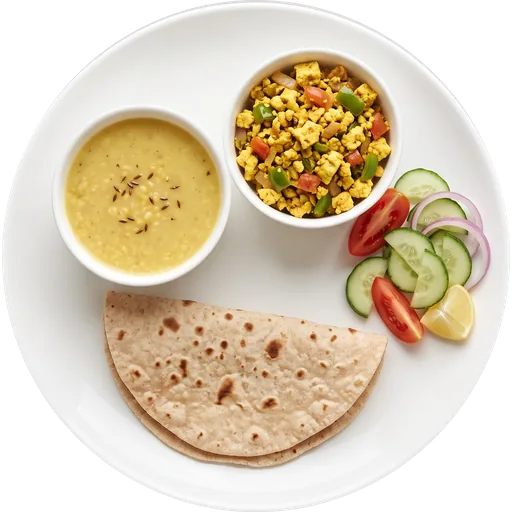
Paneer bhurji with dal, roti and salad
Whole wheat atta 1 roti; Low-fat paneer 100 g; Moong dal 20 g dry; Salad 100 g; Cooking oil 4 g
Day 2 (Tuesday): about 1,370 kcal, 90 g protein
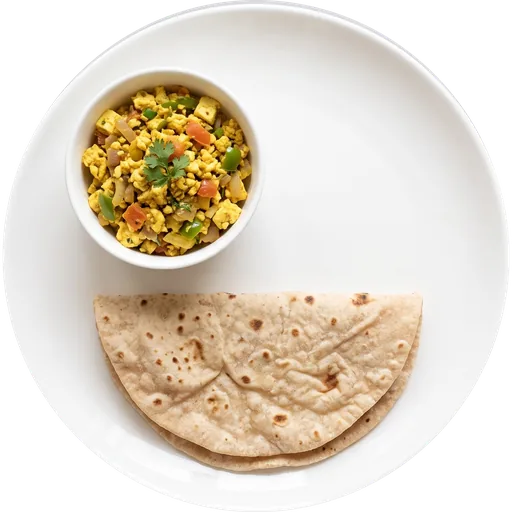
Paneer bhurji with roti
Whole wheat atta 1 roti; Low-fat paneer 45 g; Chopped vegetables 60 g before cooking; Cooking oil 4 g
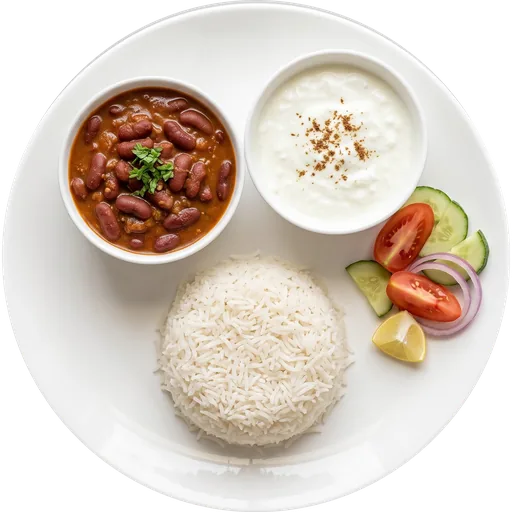
Rice with rajma, curd and salad
Rice 50 g dry; Rajma 50 g dry; Hung curd (thick curd) 125 g; Salad 100 g; Cooking oil 5 g

Sprouts chaat with curd and a fruit
Moong sprouts 75 g; Hung curd (thick curd) 125 g; Salad 50 g; Seasonal fruit 55 g
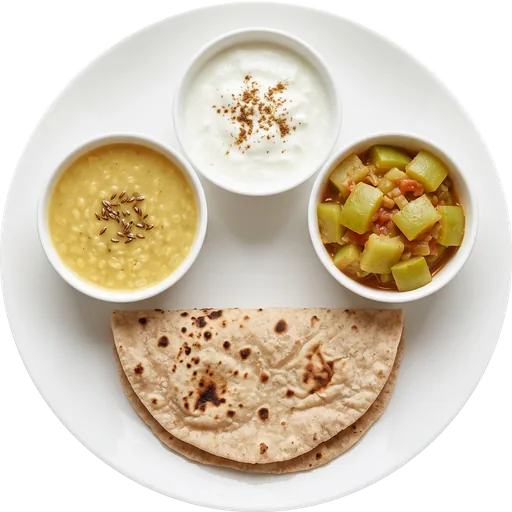
Moong dal, lauki sabzi, curd and roti
Whole wheat atta 1 roti; Moong dal 35 g dry; Hung curd (thick curd) 125 g; Lauki sabzi 150 g before cooking; Cooking oil 4 g
Day 3 (Wednesday): about 1,400 kcal, 92 g protein
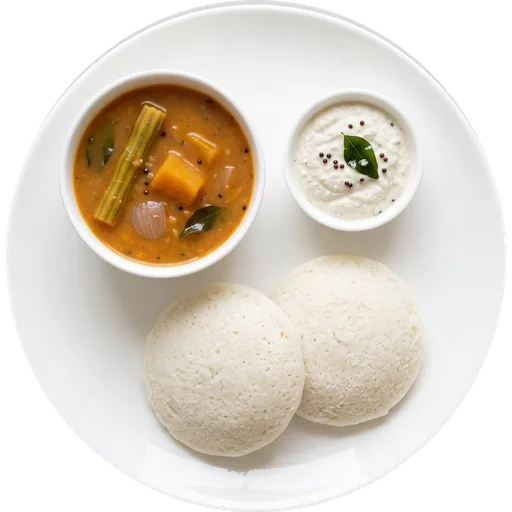
Idli with sambar and coconut chutney
Idli 2 idlis; Toor dal 25 g dry; Chopped vegetables 80 g before cooking; Coconut chutney 15 g
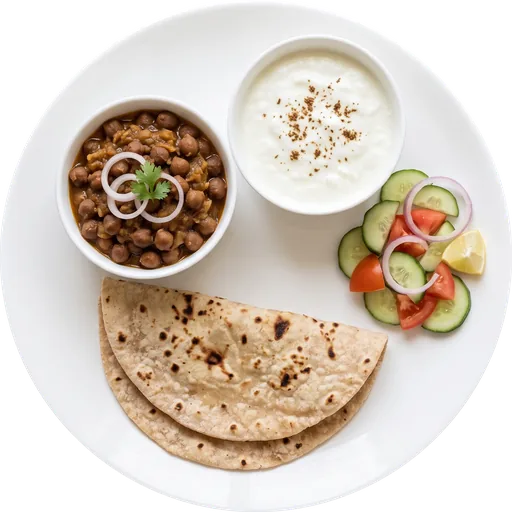
Roti with chole, curd and salad
Whole wheat atta 2 rotis; Chole 40 g dry; Hung curd (thick curd) 125 g; Salad 100 g; Cooking oil 4 g

Curd with a fruit and almonds
Hung curd (thick curd) 125 g; Seasonal fruit 50 g; Almonds 8 almonds
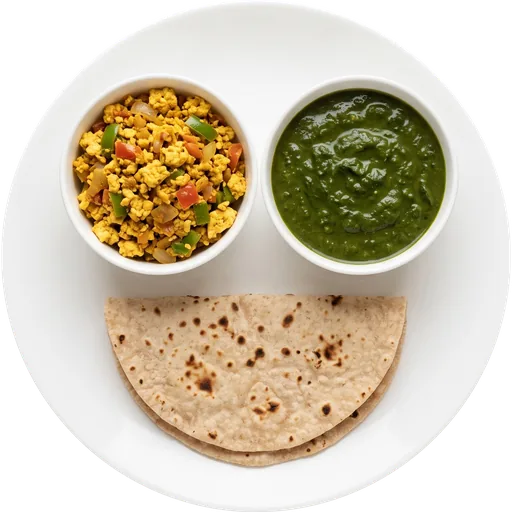
Palak sabzi with paneer bhurji and roti
Whole wheat atta 1 roti; Low-fat paneer 115 g; Palak sabzi 150 g before cooking; Cooking oil 4 g
Day 4 (Thursday): about 1,395 kcal, 86 g protein

Moong dal chilla with curd and green chutney
Moong dal 1 chilla; Chopped vegetables 40 g before cooking; Hung curd (thick curd) 100 g; Green chutney 10 g; Cooking oil 4 g
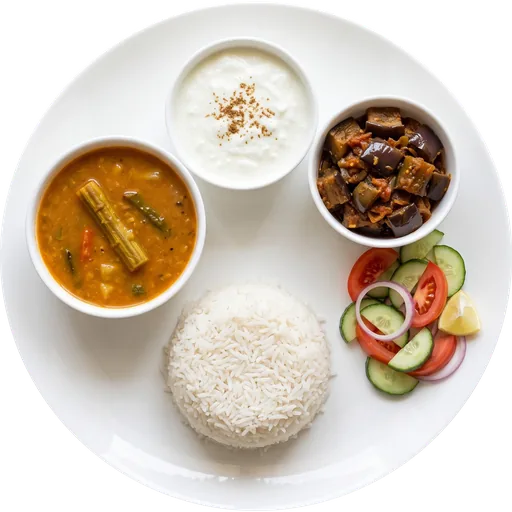
Rice with sambar, baingan sabzi and curd
Rice 55 g dry; Toor dal 35 g dry; Hung curd (thick curd) 125 g; Baingan sabzi 105 g before cooking; Salad 100 g; Cooking oil 5 g
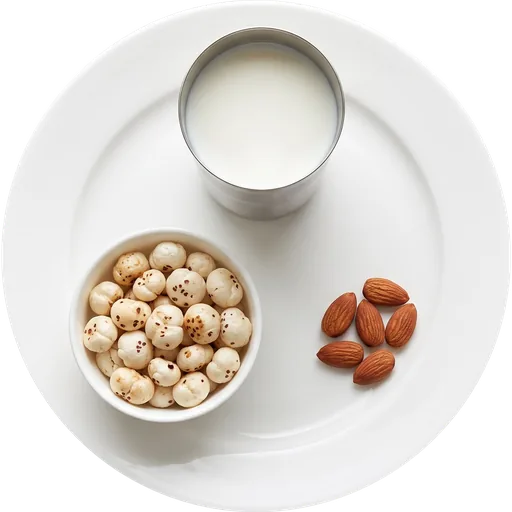
Roasted makhana with milk and almonds
Makhana 15 g dry; Toned milk 175 g; Almonds 6 almonds
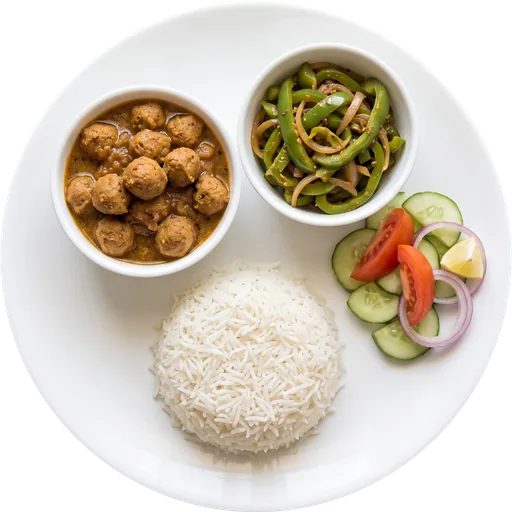
Soya chunk curry with rice
Rice 45 g dry; Soya chunks 50 g dry; Capsicum sabzi 105 g before cooking; Salad 80 g; Cooking oil 4 g
Day 5 (Friday): about 1,390 kcal, 86 g protein
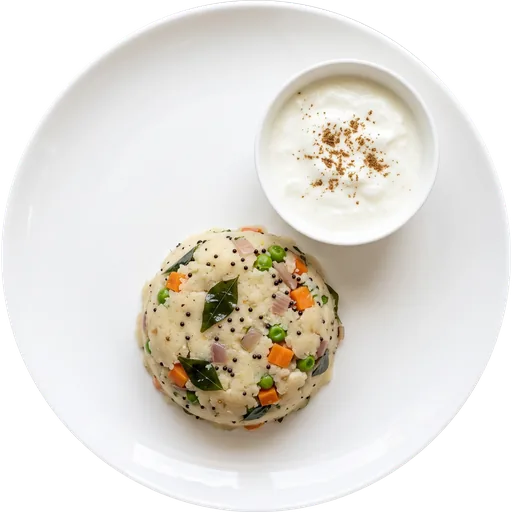
Vegetable upma with curd
Rava (suji) 20 g dry; Chopped vegetables 70 g before cooking; Hung curd (thick curd) 125 g; Cooking oil 4 g
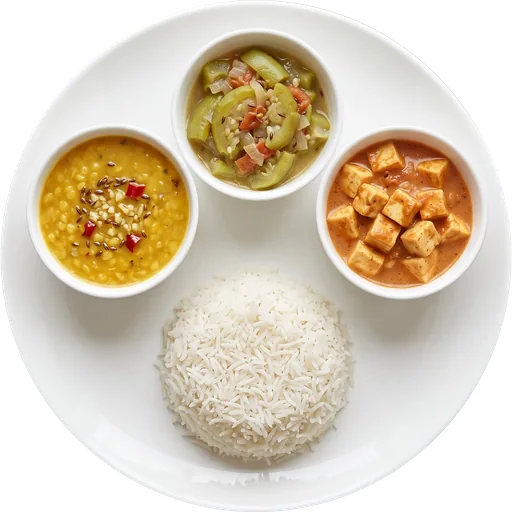
Rice, dal and tori sabzi with paneer
Rice 45 g dry; Toor dal 30 g dry; Low-fat paneer 100 g; Tori sabzi 105 g before cooking; Cooking oil 5 g
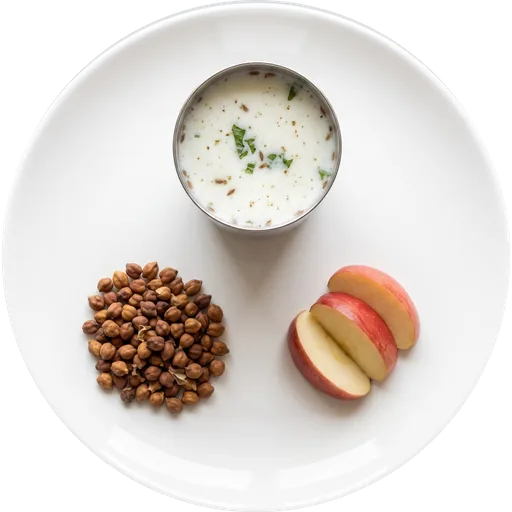
Chaas with roasted chana and a fruit
Chaas 250 g; Kala chana 20 g dry; Seasonal fruit 100 g
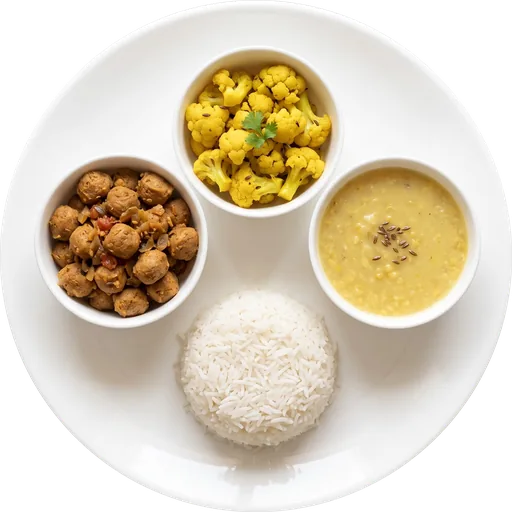
Rice, moong dal, gobi and soya chunks
Rice 40 g dry; Moong dal 35 g dry; Soya chunks 25 g dry; Gobi sabzi 105 g before cooking; Cooking oil 4 g
Day 6 (Saturday): about 1,390 kcal, 81 g protein
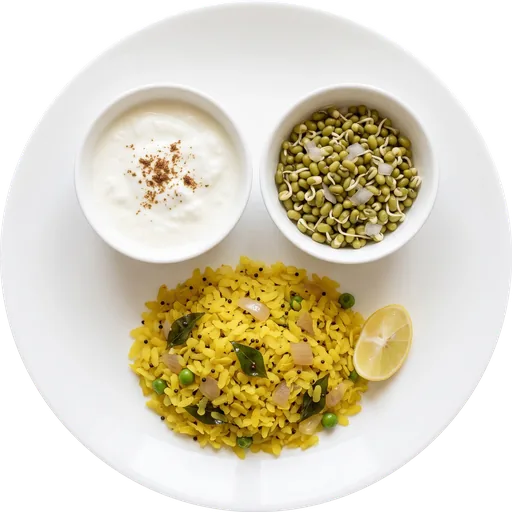
Vegetable poha with curd and sprouts
Poha 25 g dry; Chopped vegetables 60 g before cooking; Hung curd (thick curd) 100 g; Moong sprouts 50 g; Cooking oil 4 g
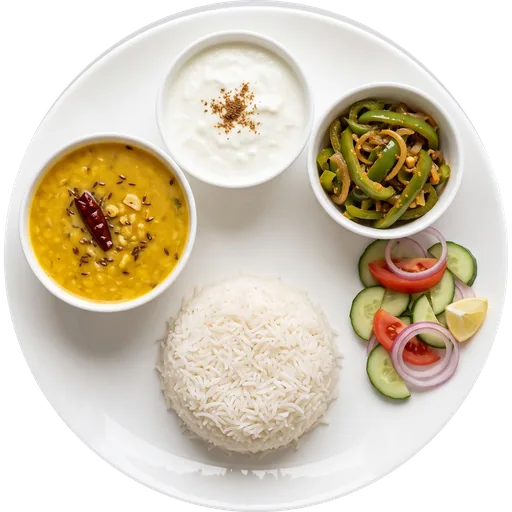
Rice with dal, capsicum sabzi and curd
Rice 55 g dry; Toor dal 35 g dry; Hung curd (thick curd) 125 g; Capsicum sabzi 105 g before cooking; Salad 100 g; Cooking oil 5 g
Milk, a fruit and roasted peanuts
Toned milk 150 g; Seasonal fruit 55 g; Peanuts 9 g

Paneer bhurji with beans, dal and roti
Whole wheat atta 1 roti; Low-fat paneer 90 g; Toor dal 20 g dry; Beans sabzi 115 g before cooking; Cooking oil 4 g
Day 7 (Sunday): about 1,405 kcal, 88 g protein
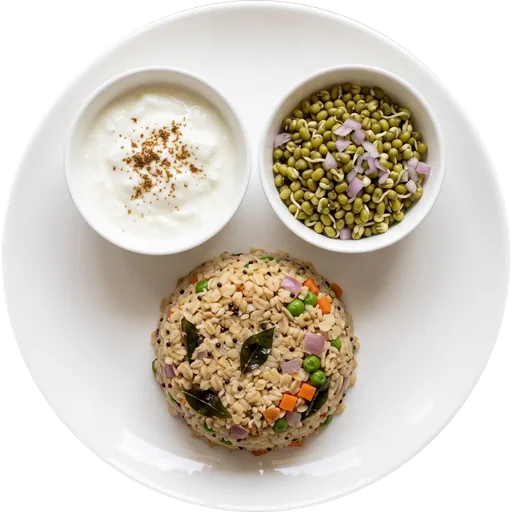
Oats upma with curd and sprouts
Oats 25 g dry; Chopped vegetables 60 g before cooking; Hung curd (thick curd) 100 g; Moong sprouts 45 g; Cooking oil 4 g
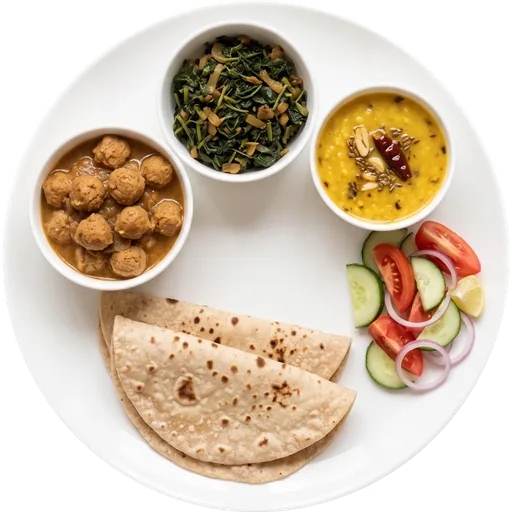
Roti, dal, soya curry and methi sabzi
Whole wheat atta 2 rotis; Toor dal 30 g dry; Soya chunks 30 g dry; Methi sabzi 115 g before cooking; Salad 100 g; Cooking oil 4 g
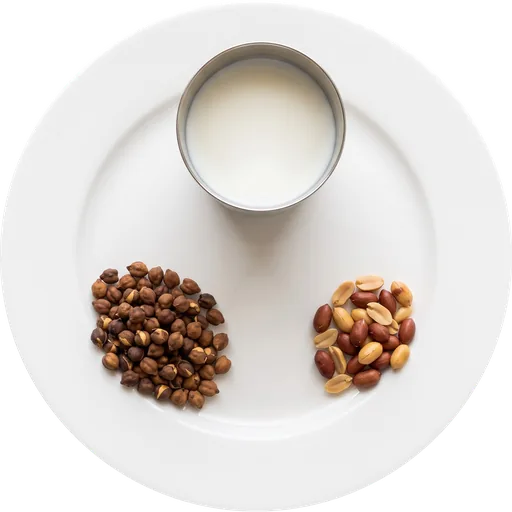
Roasted chana with milk and peanuts
Kala chana 20 g dry; Toned milk 125 g; Peanuts 9 g
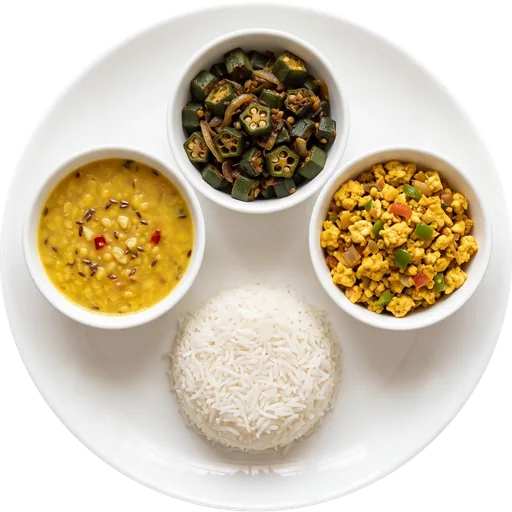
Paneer bhurji with bhindi, dal and rice
Rice 45 g dry; Low-fat paneer 65 g; Toor dal 20 g dry; Bhindi sabzi 105 g before cooking; Cooking oil 4 g
How do you adjust the plan to your own calories?
This sample is sized for about 1,400 kcal a day, which suits many women around 65 to 75 kg with a mostly sitting day. Your number may be higher or lower. The easiest way to adjust is to change the staple and keep everything else the same:
| To change your day by about… | Do this |
|---|---|
| +100 kcal | Add one roti (30 g atta) at lunch or dinner |
| +180 kcal | Add half a katori of cooked rice (50 g dry) |
| −100 kcal | Take one roti away, or use one teaspoon less oil across the day |
| −90 kcal | Skip the peanuts and almonds in the evening snack |
Keep the dal, paneer, soya, curd and sabzi as they are. They carry the protein and fibre that stop you feeling hungry.
Which easy swaps cut calories?
- Non-vegetarian: 100 g of low-fat paneer has about 22 g of protein. You get the same from about 75 g of cooked chicken, 130 g of fish, or 2 whole eggs plus 3 egg whites.
- Making hung curd: tie plain curd in a muslin cloth and let it drain in the fridge for 3 to 4 hours. Plain curd works too, but you need almost twice as much for the same protein.
- No low-fat paneer: use about three quarters of the weight in regular paneer.
- Fruit: any fruit in season of about the same size: a guava, an apple, an orange or a slice of papaya.
What stops the weight coming off?
- Free-pouring oil and ghee. One tablespoon of ghee has about as many calories as one roti. Measure with a teaspoon.
- Sweet chai two or three times a day. Three cups with two teaspoons of sugar each add about 100 kcal, before the milk.
- Too little protein. A plate of rice and sabzi alone leaves you hungry an hour later. Add dal, curd or paneer.
- "Healthy" snacks in big handfuls. Namkeen, nuts and dry fruits are good food, but 30 g of peanuts is already about 170 kcal.
- Weighing yourself every morning. Water and salt move the scale by a kilo from day to day. Weigh once a week, on the same day.
How fast will you lose weight?
A safe pace for most women is about 0.25 to 0.75 kg a week. Faster than that usually means water and muscle, not fat, and it rarely lasts. Expect the scale to move unevenly: some weeks nothing, then a drop. Your waist measurement and how your clothes fit are often the first signs.
Questions people ask
Can I eat rice and still lose weight?
Yes. Weight loss depends on your total calories for the day, not on one food. In this plan most days have 40 to 55 g of dry rice (about one small katori cooked) at one meal, with dal and sabzi alongside.
How many rotis should I eat in a day to lose weight?
In this 1,400 kcal week it is up to three rotis a day, for example two at lunch and one at dinner, each made from 30 g of atta. On rice days there are fewer. If your calorie target is higher, add a roti; if it is lower, keep one at each meal.
Is 1,400 calories a day safe for women?
For many women who want to lose weight it is a reasonable target, but the right number depends on your weight, height, age and how active you are. BodyQuest never goes below 1,200 kcal a day. Use the calculator or the quiz to see your own number.
Can I follow this plan if I have PCOS or thyroid?
The meals are balanced Indian home food and suit most women, but with a health condition please check with your doctor first. In the BodyQuest app, women who tick thyroid get a gentler calorie cut.
What if I eat non-veg?
Swap paneer, soya or curd for the same protein from eggs, chicken or fish. 100 g of low-fat paneer has about 22 g of protein, the same as about 75 g of cooked chicken, 130 g of fish, or 2 whole eggs plus 3 egg whites.
Sources
- ICMR-NIN: Dietary Guidelines for Indians (2024)
- ICMR-NIN: Indian Food Composition Tables (2017)
- NHS: Understanding calories

BodyQuest is a home weight-loss programme for Indian women, made by ASANAR STUDIOS in Mohali, Punjab. The calories, protein and portions in our articles come from the same food data and method the BodyQuest app uses to build each member's daily plan, and our advice follows the public guidance listed under Sources. We are not doctors: for a health condition, check with yours.
BodyQuest gives general fitness and food guidance for healthy adults. It does not diagnose or treat any condition. If you are pregnant, breastfeeding, or managing a health condition such as diabetes, thyroid or PCOS, check with your doctor before changing your diet or exercise.